
Putnam Projected and Actual Release
A projected date is a calculated planning milestone. It is not proof that a person left custody. IDOC's public FAQ uses “projected parole date” when discussing Earned Sentence Credit, while its sentence-calculation directive uses “projected release date” and “mandatory release date.” Preserve the label shown on the live profile because each term answers a distinct question. An actual Parole Date with a `PAROLE` status can establish prison exit into continuing supervision. Final discharge is later when supervision remains.
County custody works differently. A pretrial detainee at Putnam County Jail has no sentence-based end date. A court may order release, detention, or transfer as the case proceeds. A locally sentenced person may have an expected completion point, but presentence credit, other holds, and jail processing still matter. The court judgment and sheriff movement record must be read together.
Find a Putnam Release Date
Choose the system that holds the person. IDOC is a state-prison locator, not an archive of short Putnam County jail stays. A direct local release may never appear there. Conversely, a sheriff record that says transfer to IDOC only closes county custody. The person remains confined by the state.
- Confirm the full name, birth details, case number, and IDOC number when known.
- For state prison, open the IDOC Individual in Custody Search and compare identifiers.
- Record the exact status, institution or parole district, and all projected and actual date labels.
- For county jail, obtain the Putnam judgment and ask the sheriff for the booking or movement record.
- If a completed state sentence no longer appears online, use IDOC's contact page and select Record Search.
- Confirm a completed exit with an actual status or movement event.
The Putnam County release-record search explains how to pair the court order with sheriff, IDOC, or VINE evidence. No single search covers all three systems.
Illinois Sentence Credit Rules
Illinois calculation begins with the judgment, custody and admission dates, presentence credit, consecutive or concurrent terms, the offense, and its date. IDOC then maintains calculated milestones. Under 730 ILCS 5/3-6-3, the baseline and exceptions are offense-specific. Many offenses outside listed truth-in-sentencing groups may receive one day of sentence credit for each day served. Certain first-degree murder and terrorism provisions can require service of 100 percent. Several serious listed offenses limit credit to 4.5 days per month, commonly described as the 85 percent rule. Other listed drug or gun offenses may use a 7.5-day monthly cap, often discussed as 75 percent.
Those short descriptions are not calculators. Statutory versions, offense definitions, dates, and exceptions control. Additional earned or program credit may also be limited by floors. IDOC states that Earned Sentence Credit is discretionary and that possible eligibility creates no promise of an award. When an award revises the projected parole date, the agency says the change appears in the online profile.
Note: No simple percentage can replace the judgment, offense date, applicable law, credits, and IDOC decisions.
Why Putnam Release Dates Change
A projection can move for lawful reasons. Trace a change to an official calculation, judgment, hold, or decision rather than guessing from an old screenshot.
| Factor | Possible effect | Record to check |
|---|---|---|
| Presentence credit correction | Moves the calculated milestone | Judgment and IDOC calculation |
| Consecutive or concurrent clarification | Changes total time structure | Sentencing order |
| Credit award, loss, or restoration | Moves projected parole or release | IDOC status record |
| Warrant or detainer | May block community release | Holding agency and court |
| Escape or MSR violation time | Can alter mandatory release | IDOC and PRB records |
| Appeal or amended judgment | Requires recalculation | Latest signed order |
A date passing without a status change is a reason to verify. It is not proof of release or an error. Data correction and processing can also affect the public display.
Confirm Putnam County Release
Illinois VINE can supply custody-change alerts from participating county jail and IDOC interfaces. Search the correct person and reporting agency, then register for phone, text, email, or app delivery as offered. A release alert is timely evidence, but it is not a judicial certificate. Follow it with the sheriff, IDOC, or court when the destination matters.
Read the event literally. Transfer does not mean freedom. An IDOC parole status means community supervision continues. A BOP locator result marked “Not in BOP custody” concerns federal custody only and does not rule out a later state, local, or immigration hold. The county, state, and federal systems do not substitute for one another.
Putnam County Jail Time Credits
County-jail sentences need their own review. The sentencing order, credit for time already spent in custody, any applicable local good-behavior authority, other holds, and release processing can all affect the day a person leaves. No Putnam County-published good-time formula or weekend and holiday early-release policy was found. Importing the IDOC state-prison formula would create a false result.
Ask the Putnam County Jail for the existing calculation or release record and obtain the signed judgment from the Circuit Clerk. Women from Putnam County are generally housed at LaSalle County Jail, according to the state inspection. In that case, identify which custodian controls the movement record and reconcile the physical release with the Putnam court case.
IDOC Release Date Evidence
The official IDOC FAQ explains how sentence credit changes can be reflected in the projected date. It also cautions that the department cannot predict whether a particular person will receive discretionary credit. The successful manifest image below is matched to that official release-date source.
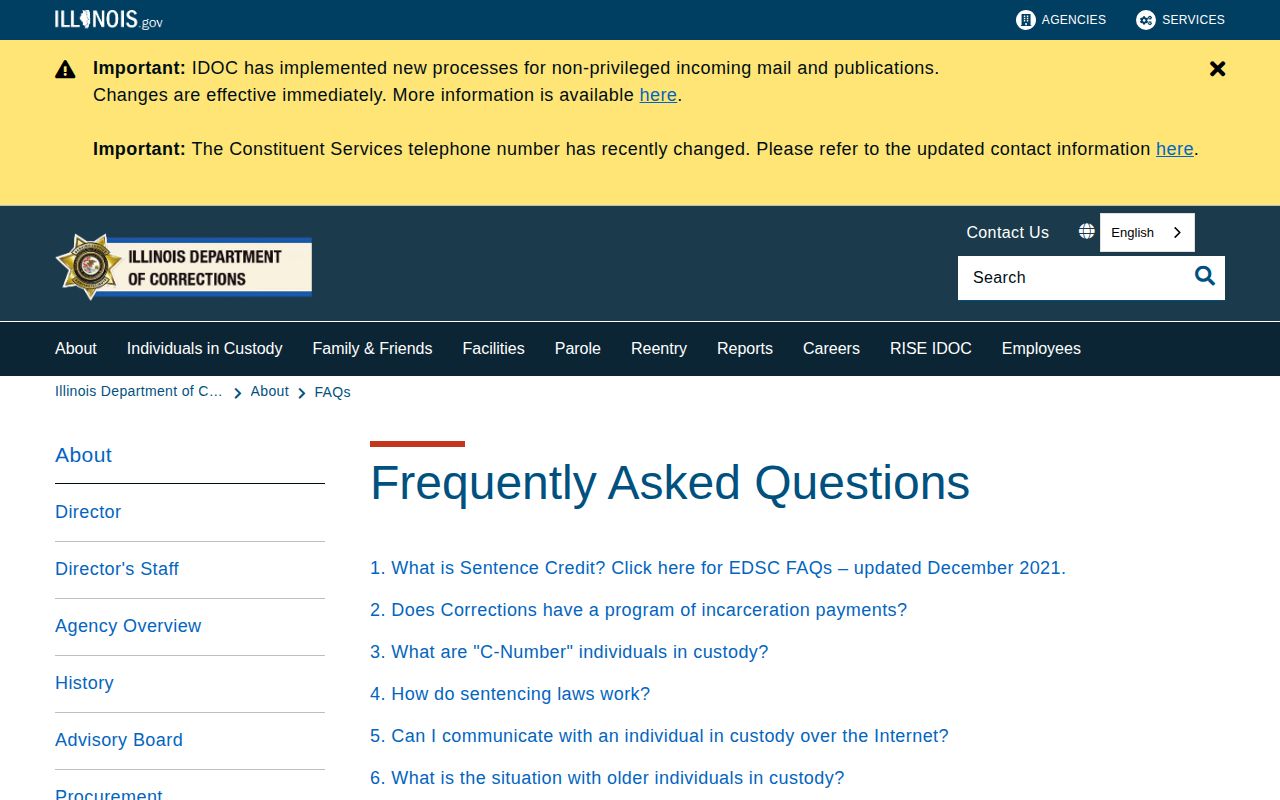
The image supports the calculation framework, but the current individual profile and agency record still control a specific person's date.
A live profile can show an identification photo, IDOC number, parent institution, Offender Status, location, admission data, sentence details, and projected or actual milestones. Read them as a group. `PAROLE` with a parole-district location and actual Parole Date supports prison exit into continuing supervision. A future Projected Discharge Date concerns the expected end of legal custody or supervision, not the prison gate date.
When the live search returns nothing, do not treat the absence as discharge. IDOC says the public locator covers people currently incarcerated or on parole. Completed sentences require archived Record Search. Supply the full name, birth date, year received, and any known facility, conviction county, or relevant dates. The Putnam court judgment helps connect an older county case to the state record.
Putnam Release Event Meanings
Bond or pretrial release ends the jail stay while the case continues. Time served may complete a local custodial term while probation or another case remains. Transfer to IDOC, another county, USMS, or ICE changes the custodian. Parole or MSR means prison exit under conditions. Discharge may end one agency's control or the whole sentence, depending on the source.
Escape and absconding are not lawful release. A deceased status is a custody termination but should never be described as ordinary release. Exact labels matter because a generic date can hide these differences.